

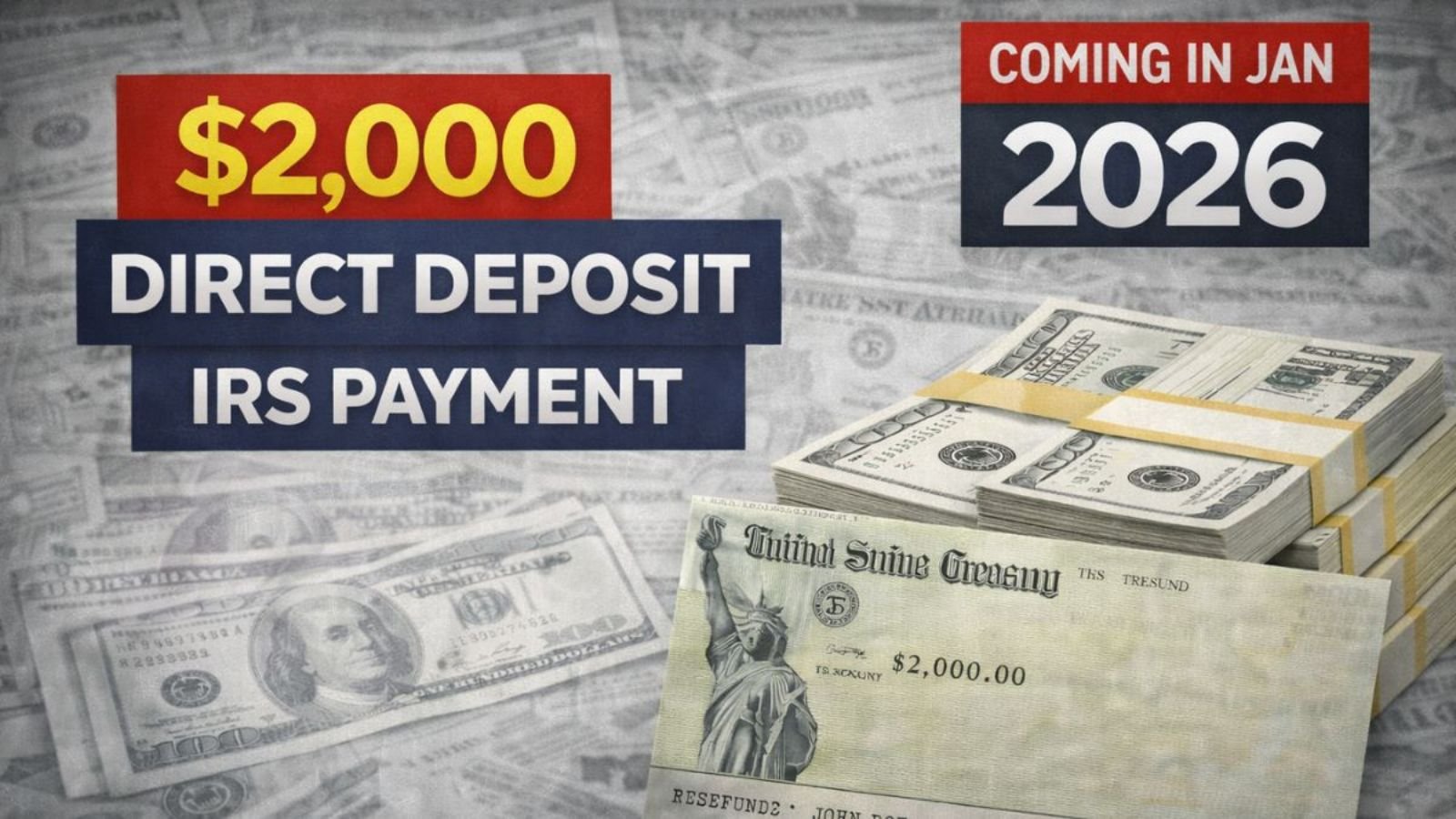
As April 2026 gets underway, conversations about a possible $2,000 Direct Deposit are gaining serious traction across the United States. With the cost of living continuing to rise—especially when it comes to housing, groceries, fuel, and healthcare—many households are actively looking for financial relief. It’s no surprise that the idea of a $2,000 Direct Deposit has captured public attention and sparked widespread curiosity.
However, it’s important to begin with a clear and realistic understanding: there is currently no officially confirmed nationwide stimulus payment of $2,000 being issued by the Internal Revenue Service (IRS). While the phrase $2,000 Direct Deposit is trending heavily, the reality is more nuanced. In most cases, deposits around this amount are not coming from a brand-new federal program, but rather from a combination of existing benefits, tax refunds, and credits.
Understanding where this money is actually coming from—and whether you might qualify—is essential for setting the right expectations and planning your finances effectively.
IRS Confirms $2,000 Direct Deposit for All — Payment will be started from 1st April
Where Could the $2,000 Direct Deposit Actually Come From?
The reason the $2,000 Direct Deposit figure keeps appearing in discussions is because multiple financial programs and benefits often overlap during tax season. When combined, these payments can add up to amounts close to or even exceeding $2,000.
Here are the most common sources that may result in a $2,000 Direct Deposit:
- IRS Tax Refunds: Many taxpayers receive substantial refunds after filing their annual returns, especially if they qualify for deductions and credits.
- Child Tax Credit (CTC): Families with eligible children may receive additional financial support through this credit.
- Earned Income Tax Credit (EITC): This benefit supports low- to moderate-income workers and can significantly boost refund amounts.
- Social Security Benefits: Monthly payments for retirees often contribute to total deposits during the month.
- SSDI and SSI Payments: Individuals receiving disability benefits may see their monthly payments coincide with other credits.
- Veterans Benefits: Payments from the Department of Veterans Affairs can also contribute to the overall amount received.
When these sources overlap—particularly during April, which is peak tax season—it can create the impression that a single $2,000 Direct Deposit is being issued. In reality, it is often a combination of multiple payments arriving within a short timeframe.
April 2026 Payment Schedule Explained
The timing of payments plays a major role in why the $2,000 Direct Deposit figure is trending. April is a critical month for financial activity because it aligns with tax filing deadlines, refund processing, and regular benefit distributions.
Here’s how the payment schedule generally works:
- Tax Refunds: Typically arrive within 2 to 3 weeks after filing, especially for those who file electronically and choose direct deposit.
- Social Security Payments: Distributed based on the recipient’s birth date, usually on Wednesdays throughout the month.
- SSI Payments: Often deposited at the very beginning of the month.
- SSDI and Other Benefits: Follow structured monthly schedules depending on eligibility and program rules.
Because these payments can arrive around the same time, many individuals may see deposits totaling around $2,000 Direct Deposit or more in their bank accounts during April. This overlap is one of the main reasons the topic has gained so much attention.
Who May Be Eligible for Payments Around $2,000?
Eligibility for a $2,000 Direct Deposit depends entirely on the type of payment involved. There is no single set of rules that applies universally, as different programs have different requirements.
For Tax Refunds:
- You must file a valid federal tax return
- You may need to qualify for refundable credits such as the CTC or EITC
- Your income must fall within eligible ranges
For Federal Benefits:
- Retirees receiving Social Security
- Individuals with disabilities receiving SSDI or SSI
- Low- to moderate-income households
- Families with dependents
- Veterans receiving VA benefits
Those who file their taxes early and qualify for multiple credits are more likely to receive higher combined payments, potentially reaching or exceeding the $2,000 Direct Deposit level.
Why the $2,000 Direct Deposit Amount Is Trending
There are several reasons why the $2,000 Direct Deposit figure has become such a hot topic:
- Past Stimulus Payments: During previous years, stimulus checks were often close to this amount, creating expectations among the public.
- Tax Refund Patterns: Many taxpayers historically receive refunds in the $1,500–$3,000 range, making $2,000 a common figure.
- Combined Benefits: When multiple payments are issued together, the total can easily reach $2,000 or more.
It’s important to remember that not everyone will receive exactly a $2,000 Direct Deposit. Payment amounts vary widely based on individual circumstances, including income, family size, and eligibility for various programs.
सम्बंधित ख़बरें




How to Receive Your Payment Faster
If you are expecting any type of $2,000 Direct Deposit—whether from tax refunds or benefits—there are several steps you can take to ensure faster processing:
- File Your Taxes Electronically: E-filing significantly reduces processing time compared to paper returns.
- Choose Direct Deposit: This is the fastest and most secure way to receive funds.
- Verify Your Bank Details: Incorrect account information can delay payments.
- Track Your Refund Status: Use official IRS tools to monitor progress.
- Avoid Errors: Double-check your tax return before submitting it.
By following these steps, you can improve your chances of receiving your $2,000 Direct Deposit (or any other payment) without unnecessary delays.
Be Careful of Scams and Misinformation
Whenever financial topics like $2,000 Direct Deposit start trending, scams tend to increase. Fraudsters often take advantage of public interest to trick people into sharing personal or financial information.
Here are some important safety tips:
- The IRS does not request sensitive information via phone calls, text messages, or emails
- Avoid clicking on suspicious links claiming to offer payment updates
- Only rely on official government websites for accurate information
- Never share your bank details with unknown sources
Protecting your personal information is essential, especially during tax season when financial activity is at its peak.
What to Expect Moving Forward
As of now, the $2,000 Direct Deposit discussions are largely driven by existing programs rather than a new stimulus initiative. While future government support programs are always possible, any nationwide payment would require official approval and a formal announcement.
For April 2026, most payments will come from:
- Tax refunds
- Federal benefit programs
- Credit adjustments
Understanding this helps set realistic expectations and prevents confusion. The $2,000 Direct Deposit figure is not a guaranteed payment for everyone—it is simply a common total that many people may reach through combined financial sources.
Practical Tips for Managing Your Payments
Whether you receive a $2,000 Direct Deposit or a smaller amount, managing your finances wisely is key. Consider these practical strategies:
- Prioritize essential expenses like rent, utilities, and groceries
- Pay off high-interest debts if possible
- Set aside a portion for savings or emergencies
- Plan your monthly budget based on expected income
Even if the amount varies, using your funds strategically can help improve your overall financial stability.
Final Thoughts
The buzz around the $2,000 Direct Deposit in April 2026 reflects the financial challenges many households are facing today. While the idea of a universal payment is appealing, the reality is that most deposits in this range come from a combination of tax refunds and existing benefits—not a new stimulus program.
By staying informed, understanding eligibility criteria, and relying on official sources, you can get a clearer picture of what to expect. The $2,000 Direct Deposit may not be a guaranteed check, but for many Americans, it represents the combined impact of financial support programs working together.
Being proactive—filing taxes early, verifying your information, and tracking your payments—will ensure that you receive any funds you’re entitled to without delays. In a time of rising costs and economic uncertainty, every dollar matters, and understanding how these payments work can make a meaningful difference in your financial planning.
Some Important Link
| Download News APP | Click Here |
| WhatsApp Group | Click Here |
| Home Page | Click Here |