
As discussions around financial relief continue to dominate headlines in 2026, one topic that keeps resurfacing is the possibility of a new $2,000 stimulus check for Americans. With the cost of living still putting pressure on households—whether it’s groceries, rent, healthcare, or fuel—many people are paying close attention to any updates that hint at additional government support. At the same time, it’s important to look at the situation realistically and separate speculation from confirmed policy so that expectations remain grounded in facts rather than assumptions.
Over the past few months, the idea of a $2,000 stimulus check has gained noticeable traction. This is largely because several political leaders and lawmakers have discussed the possibility of providing financial relief using alternative funding sources, including revenue generated from tariffs. While this has sparked curiosity and optimism among the public, there has still been no official confirmation of a nationwide $2,000 stimulus check being issued in April 2026. What currently exists is a mix of early proposals, policy discussions, and exploratory ideas that may eventually lead to something concrete—but just as easily may not.
Why the $2,000 Stimulus Check Is Trending in 2026
The growing buzz around a $2,000 stimulus check is not random—it is closely tied to the broader economic environment. Even though inflation has slowed compared to its peak in earlier years, everyday expenses remain significantly higher than they were before the pandemic. For many families, even small increases in monthly costs can strain budgets, especially for those already living on tight incomes.
This is exactly why the idea of a $2,000 stimulus check resonates with so many people. During the pandemic, stimulus payments played a critical role in helping households cover essential expenses. Because of that experience, many Americans now associate direct payments with immediate financial relief and stability. The familiarity of past stimulus programs has made the concept of another $2,000 stimulus check feel both realistic and desirable.
Another reason the topic keeps trending is tax season. Around this time of year, many people receive tax refunds that are close to—or even exceed—$2,000. This often leads to confusion, with some assuming that a new $2,000 stimulus check is being distributed. In reality, these payments are typically the result of tax credits or overpaid taxes being refunded, not a newly approved government program.
Political Proposals and Statements
The conversation around a $2,000 stimulus check has been fueled in part by statements from prominent political figures, including Donald Trump. He has publicly discussed the possibility of sending rebate-style payments to Americans, potentially funded through tariff revenues. This idea has attracted attention because it represents a different approach compared to traditional stimulus funding methods.
In interviews, he has indicated that the idea is being seriously considered, which many people interpret as a step toward a potential $2,000 stimulus check. However, it’s crucial to understand that such statements do not equate to an approved policy. Any payment of this scale would require formal legislative approval before it could become reality.
Other lawmakers have also contributed to the discussion. For example, Henry Cuellar introduced the American Consumer Tariff Rebate Act of 2026. This proposal suggests allocating significant funds to provide rebate payments to taxpayers, which could resemble a $2,000 stimulus check depending on eligibility and household composition.
Similarly, Martin Heinrich proposed the Tariff Refunds for Working Families Act. While this plan outlines a different payment structure—with base payments and additional support for children—it still reflects the broader push toward financial assistance. Even though it may not match the exact amount of a $2,000 stimulus check, it shows that policymakers are actively exploring ways to provide relief.
What Needs to Happen for a Stimulus Check to Become Reality
For a $2,000 stimulus check to actually reach Americans, a detailed and structured process must take place. It doesn’t happen overnight, and it certainly doesn’t happen based on discussions alone.
First, a formal bill must be introduced in Congress. This bill would outline everything—from eligibility criteria and payment amounts to funding sources and distribution methods. Once introduced, the bill would go through debates, revisions, and negotiations.
Next, both the House of Representatives and the Senate must approve the legislation. This step often takes time because lawmakers may disagree on key details, including whether a $2,000 stimulus check is financially feasible or how it should be structured.
After passing both chambers, the bill must be signed into law by the President. Only then can agencies like the Internal Revenue Service begin distributing payments.
This entire process explains why discussions about a $2,000 stimulus check do not immediately result in actual payments.
Is There a $2,000 Stimulus Check Coming in April 2026?
As of now, there is no confirmed nationwide $2,000 stimulus check scheduled for April 2026. While proposals are being discussed and ideas are circulating, no legislation has been passed that would authorize such a payment.
This is an important point because misinformation spreads quickly, especially online. Many posts or articles may claim that a $2,000 stimulus check has already been approved or is being distributed, but these claims are not backed by official announcements.
सम्बंधित ख़बरें
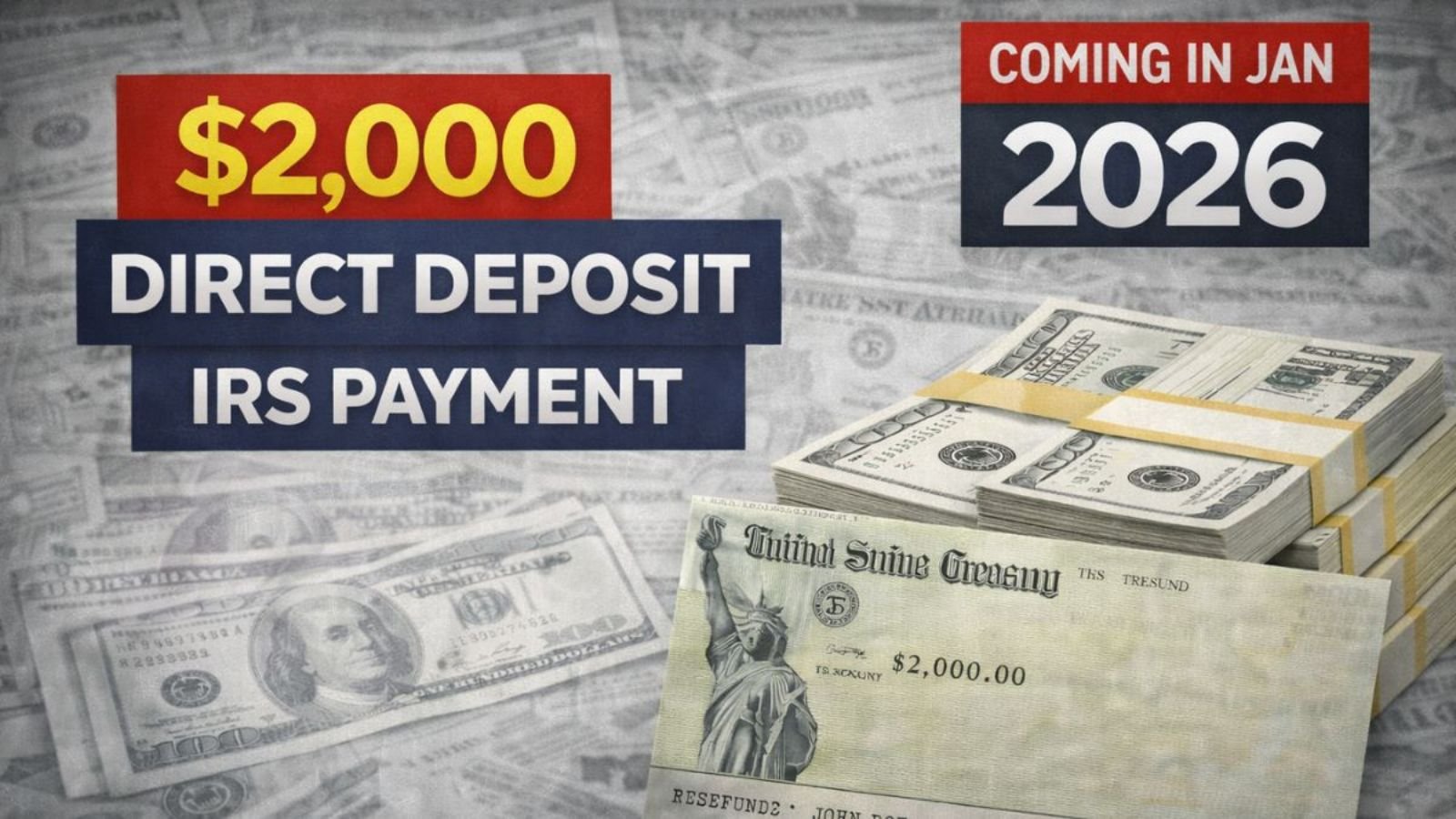



Instead, any payments people receive in April are likely coming from existing programs—such as tax refunds, Social Security benefits, or other federal assistance. In some cases, these payments may add up to amounts close to a $2,000 stimulus check, which is why the confusion persists.
Understanding Proposed Payment Structures
Even if a $2,000 stimulus check is approved in the future, it is unlikely to be distributed equally to everyone. Most proposals include income-based eligibility rules, meaning that higher-income individuals may receive reduced payments or none at all.
For instance, some proposals suggest limiting eligibility to individuals earning below a certain income threshold, such as $400,000 annually. Others recommend smaller base payments with additional amounts for dependents. These variations highlight that a $2,000 stimulus check is not always a fixed or universal amount.
Additionally, the final structure would depend on several factors, including government budget constraints, economic conditions, and political priorities. This means that even if the idea moves forward, the final version of a $2,000 stimulus check could look quite different from initial expectations.
What Happened to Previous Payment Ideas
The idea of direct payments is not new. In fact, alongside discussions about a $2,000 stimulus check, there have been proposals for even larger payments in the past—such as $5,000 checks funded through government savings initiatives.
However, many of these proposals never progressed beyond the discussion stage. Issues like budget limitations, political disagreements, and logistical challenges often prevent such ideas from becoming reality. This history serves as a reminder that not every proposal for a $2,000 stimulus check will lead to actual payments.
Why Financial Relief Discussions Continue
The continued interest in a $2,000 stimulus check reflects ongoing concerns about financial stability. Even though the economy has shown signs of recovery, many households are still dealing with the long-term effects of inflation and rising costs.
Government support programs are often seen as a way to ease this burden, which is why discussions about a $2,000 stimulus check remain relevant. At the same time, policymakers must balance the need for relief with concerns about national debt and long-term economic impact.
This balancing act is one of the main reasons why new stimulus payments are carefully evaluated rather than quickly approved.
How to Stay Informed and Avoid Misinformation
With so much information circulating online, it’s essential to rely on trusted and official sources when tracking updates about a $2,000 stimulus check. Government websites, verified news outlets, and official announcements provide the most accurate information.
It’s also important to stay alert for scams. Fraudulent messages claiming to offer a $2,000 stimulus check may try to collect personal or financial information. Legitimate government agencies do not request sensitive details through unsolicited messages or links.
Being cautious and well-informed can help individuals avoid confusion and protect themselves from potential fraud.
Conclusion
The idea of a $2,000 stimulus check continues to capture attention in 2026, largely due to ongoing economic challenges and active political discussions. While there is clear interest from both the public and some lawmakers, there is currently no confirmed plan to distribute a nationwide $2,000 stimulus check in April.
Understanding the difference between speculation and official policy is essential. Any future payment would require legislative approval, clearly defined eligibility criteria, and a structured distribution process. Until then, most payments received by Americans will come from existing programs rather than a new $2,000 stimulus check.
For now, staying informed, following official updates, and maintaining realistic expectations will help people navigate the situation with greater clarity and confidence.
Disclaimer: This article is for informational purposes only and is based on currently available reports and public discussions. No official nationwide $2,000 stimulus check has been confirmed as of April 2026. Payment details, eligibility, and timelines may change depending on future government decisions.
Some Important Link
| Download News APP | Click Here |
| WhatsApp Group | Click Here |
| Home Page | Click Here |